This talk will explore how today’s graphics research is making enormous LiDAR and photogrammetry datasets practical for interactive use, even when they contain billions of samples. Drawing on his recent work at TU Wien, Markus Schütz will present techniques for simultaneous level-of-detail generation and rendering, real-time decompression and rasterization, direct out-of-core rendering of massive point clouds, and GPU-accelerated processing workflows that enable high-performance, high-quality exploration of large 3D scans in both conventional and immersive settings.
No equipment necessary.
Markus Schütz is a postdoctoral researcher in the Rendering and Modeling group at TU Wien, where his work focuses on point cloud rendering and large-scale 3D visualization. His research spans compute-shader-based point rendering, software rasterization of billions of points in real time, GPU-accelerated and simultaneous LOD generation, real-time decompression, and direct out-of-core rendering of massive point clouds; he is also known for his early work on Potree, one of the best-known approaches to web-based point cloud visualization. His contributions have been recognized with best paper distinctions at High-Performance Graphics 2022 and EGPGV 2024, and he is currently involved in TU Wien’s WWTF-funded project Instant Visualization and Interaction for Large Point Clouds.

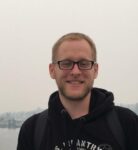 Markus Schütz is a postdoctoral researcher in the Rendering and Modeling group at TU Wien, where his work focuses on point cloud rendering and large-scale 3D visualization. His research spans compute-shader-based point rendering, software rasterization of billions of points in real time, GPU-accelerated and simultaneous LOD generation, real-time decompression, and direct out-of-core rendering of massive point clouds; he is also known for his early work on Potree, one of the best-known approaches to web-based point cloud visualization. His contributions have been recognized with best paper distinctions at High-Performance Graphics 2022 and EGPGV 2024, and he is currently involved in TU Wien’s WWTF-funded project Instant Visualization and Interaction for Large Point Clouds.